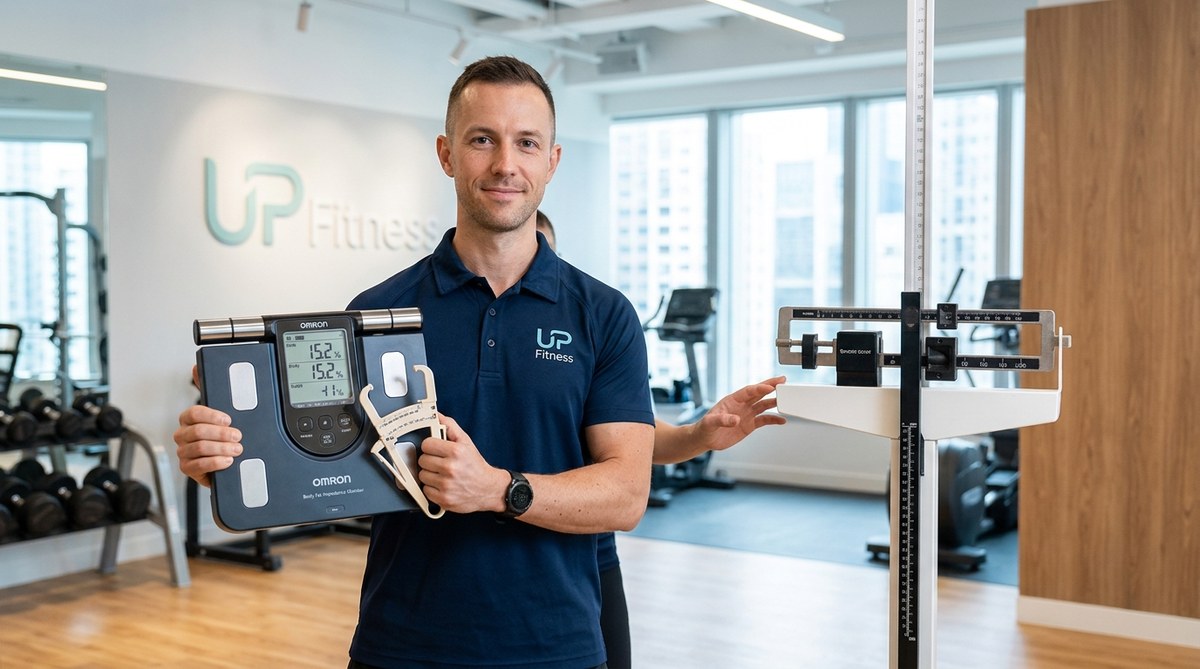
Body fat percentage and BMI are two numbers that pop up in conversations about health and fitness. For many, the scale is the first tool to gauge progress, while others rely on BMI charts to decide if they are in a healthy category. But the truth is far more nuanced. At UpFitness HK we help you see the bigger picture by looking at body composition, metabolic health, and real world goals. In this article we break down body fat versus BMI, what each metric measures, where they fall short, and how to use them in a practical, balanced way to support better fitness, wellness, and post partum training.
What BMI Is
Body mass index or BMI is a simple calculation that uses your height and weight to give a rough snapshot of whether you are underweight, normal weight, overweight, or obese. The formula is straightforward:
- BMI = weight in kilograms divided by height in meters squared
- or BMI = (weight in pounds / height in inches squared) x 703
BMI was designed as a population screening tool to identify possible weight related health risks. It is not a direct measure of body fat or health in every individual. That is because BMI does not account for how much of your body weight is lean muscle, fat, bone, or water. It also does not reflect how fat is distributed on your body, which is an important factor for health.
Key considerations about BMI:
– It provides a quick, accessible ranking at a population level.
– It can misclassify people who are muscular or athletic as overweight.
– It may underestimate health risks in older adults who have lost muscle mass.
– It does not distinguish between visceral fat and subcutaneous fat, both of which influence risk differently.
For many of our readers at UpFitness HK, BMI remains a useful starting point, especially when combined with other metrics that tell a fuller health story.
What Body Fat Percentage Is
Body fat percentage (BF%) is the proportion of your body that is fat mass relative to total body mass. This number differentiates fat from lean tissue such as muscles, bones, and organs. BF% gives a more direct view of your body composition and is often more closely linked with health outcomes than BMI alone.
Understanding BF% helps you answer practical questions like:
– How much fat do I actually carry?
– Am I losing fat, not just water weight or muscle?
– Am I maintaining healthy lean mass while trying to trim fat?
Essential fat is a necessary reserve for bodily functions. Athletes and fit individuals often carry a higher lean mass, which can reduce the percentage of body fat even at a higher body weight. Conversely, a low BF% is not inherently healthy if it comes with low energy, poor hormonal balance, or excessively low strength.
Typical BF% ranges (rough guidelines, not a substitute for personalized advice):
– Women: 21-33% is common for adults aiming for balanced health; athletes may range lower
– Men: 8-20% is common for healthy adults; athletes may go lower depending on sport
Note that exact healthy ranges vary with age, sex, genetics, and activity level. Your clinician or trainer can tailor targets to your unique situation.
BMI vs Body Fat Percentage: Common Misconceptions
There are many myths around these measurements. Here are a few, with the reality explained in plain terms:
-
Myth: BMI equals health.
Reality: BMI is a statistical tool, not a direct health measure. It does not account for muscle mass, bone density, or fat distribution. -
Myth: A normal BMI guarantees you are healthy.
Reality: Normal BMI can hide high body fat percentage or unhealthy fat distribution, such as visceral fat around the organs. -
Myth: A high BF% automatically means you are unhealthy.
Reality: Some individuals with higher BF% may have excellent metabolic health markers depending on distribution, fitness level, and lifestyle. -
Myth: You should always aim for a very low BF%.
Reality: Extremely low BF% can impair energy, hormones, and performance. Healthy ranges balance function, hormones, and athletic goals. -
Myth: BF% and waist size always track together.
Reality: They may diverge. It is possible to have a manageable BF% with a larger waist due to posture, body shape, or recent training cycles.
Why Both Metrics Matter
Neither BMI nor BF% tells the complete health story on its own. When used together, they provide a more complete picture:
- BMI helps flag general weight related risk in a broad population.
- BF% informs you about metabolic health and fat related risk more directly than BMI.
- Waist circumference adds insight into visceral fat, which is strongly linked to metabolic disease.
- Tracking both metrics over time, alongside strength, energy, and functional measures, gives a clearer view of progress.
For many clients, a practical approach is to use BMI as an initial screen, BF% for goal oriented planning, and waist measurements to gauge central fat changes. This trio often leads to smarter, more sustainable outcomes.
How to Measure and Interpret
Measuring these numbers with care matters. Each method has pros and cons, plus some practical tips to improve accuracy.
BMI Calculation: Quick Guide
- Use metric units if possible: BMI = weight (kg) / height (m)^2
- In pounds and inches: multiply by 703
- Simple interpretation:
- Underweight: BMI below 18.5
- Normal weight: 18.5 to 24.9
- Overweight: 25 to 29.9
- Obese: 30 or above
- Remember: This is a guideline for populations, not a diagnosis for an individual.
Body Fat Measurement Tools: What Works Best for You
- Skinfold calipers
- How it works: Thickness measurements at multiple sites (for example triceps, suprailiac) to estimate BF%.
- Pros: Inexpensive, portable, private.
-
Cons: Accuracy depends on technique and technician skill; less reliable for very lean or very obese individuals.
-
Bioelectrical impedance analysis (BIA)
- How it works: Sends a small electrical current through the body to estimate fat and lean mass.
- Pros: Quick and easy, can be done at home with scales or handheld devices.
-
Cons: Sensitive to hydration status; results can fluctuate with fluid balance and meals.
-
DEXA scan
- How it works: Low exposure X ray scan that measures bone mineral content, lean mass, and fat mass.
- Pros: Very accurate, provides regional fat distributions; also helpful for bone health.
-
Cons: Requires access to a facility; cost may be higher; small radiation exposure.
-
Hydrostatic (underwater) weighing
- How it works: Body density is estimated by comparing weight in air and underwater.
- Pros: Historically considered accurate.
-
Cons: Less accessible; procedure can be uncomfortable and require specialized equipment.
-
Waist circumference and waist to hip ratio
- How it works: Simple tape measure around natural waist or at the widest point between waist and hips.
- Pros: Easy to perform; strongly linked to visceral fat and metabolic risk.
- Cons: Does not give BF% directly; must be used with other metrics.
Practical tips for measurement:
– Be consistent: measure at the same time of day, under similar conditions (hydration, meals).
– Use the same method and the same person performing the measurement when possible.
– Track trends over weeks and months rather than obsessing over a single reading.
How to Interpret for Real Life Outcomes
- For fat loss goals
- Focus on BF% changes and waist measurements alongside strength and performance improvements.
-
Read fat loss signals from clothes fit, energy levels, and gym performance rather than chasing a lower number on the scale alone.
-
For muscle gain and athletic performance
- BF% may stay flat while you gain lean mass, which can slightly increase weight but improve appearance and function.
-
Prioritize strength benchmarks, endurance capacity, and movement quality.
-
For postpartum and mid life
- Hormonal changes, sleep, and stress influence both BF% and BMI.
-
A gradual BF% reduction with maintenance of lean mass often supports better energy, mood, and functional recovery.
-
For high performance athletes
- BF% targets are sport specific. Some athletes maintain very lean profiles yet depend on intense training and nutrition strategies to preserve performance.
Special Populations and Misclassifications
- Athletes and high muscle mass
-
They may have higher BMI but low BF% and excellent metabolic health. Do not rely solely on BMI to judge fitness.
-
Older adults
-
Muscle mass tends to decline with age. BMI may be normal, but BF% can increase and metabolic risk can rise if activity is low. Emphasize strength training and functional fitness.
-
Pregnancy and postpartum
-
Body composition shifts naturally. Tracking BF% is less critical than maintaining energy, nutrient balance, and functional capacity.
-
Ethnic and genetic factors
- Some populations may have different body composition patterns. Use personalized targets rather than universal thresholds.
Action Plan: Track What Matters
1) Start with a practical baseline
– Record your BMI, BF%, waist circumference, and a functional fitness measure (like push ups, plank duration, or a timed walk).
– Note how you feel on most days: energy, sleep quality, mood, and recovery.
2) Set small, sustainable goals
– Choose one fat loss or muscle gain target every 8 to 12 weeks.
– Tie goals to workouts you enjoy and realistic nutrition adjustments rather than extreme changes.
3) Create a simple measurement cadence
– Check BF% and waist circumference every 4 to 8 weeks.
– Track BMI monthly as a rough trend while focusing on BF% and functional metrics.
4) Align training and nutrition
– For fat loss: prioritize protein intake, consistent resistance training, and moderate cardio.
– For muscle gain: ensure adequate calories and protein to support lean mass growth while maintaining BF% within healthy ranges.
5) Reassess and adjust
– If progress stalls, revisit sleep, stress management, and hydration.
– Consider seeking guidance from a qualified coach for personalized programming.
Tools and Resources You Can Use
- Online BMI calculators for quick screening
- BF% calculators, including estimates from skinfold measurements
- BIA enabled scales for at home tracking
- DEXA clinics or medical centers for precise body composition analysis
- Wearable tech to monitor activity, heart rate, and recovery
- Food tracking apps to manage protein and energy intake
- Community programs or postpartum fitness groups for support and accountability
Remember that these tools are aids, not absolutes. The best approach combines data with movement quality, nutrition, sleep, stress, and intention.
Takeaways
- BMI is a population level metric that helps categorize weight relative to height but does not describe body composition or health in individuals.
- Body fat percentage provides a more direct look at fat in the body and is often more informative for health and fitness goals.
- Both metrics matter. Use BMI for a quick screen, BF% to guide fat loss and lean mass decisions, and waist measurements to assess visceral fat risk.
- Measurement accuracy improves when you stay consistent with the method, timing, and technique.
- Personalization matters. Goals should respect age, sex, activity level, pregnancy/postpartum status, and sport or life demands.
Frequently Asked Questions
Q: How often should I measure BF%?
A: Every 4 to 8 weeks is a sensible cadence to track meaningful change without chasing small fluctuations. If you are just starting, more frequent checks can help you calibrate training and nutrition; then move to a longer interval.
Q: Can BMI be normal while BF% is high?
A: Yes. You can have a normal BMI yet carry a higher percentage of body fat and lower lean mass. This condition can be linked to metabolic risks despite a normal BMI, underscoring the need to consider BF% and waist measures.
Q: Is DEXA the gold standard for body composition?
A: DEXA is highly accurate and gives detailed information about fat, lean mass, and bone density. It is excellent for precise assessments but not always practical for routine monitoring due to cost and access.
Q: What should I do if my goals conflict with the numbers?
A: Focus on functional outcomes first. Improve strength, endurance, energy, and mood. Let BF% and BMI trends support those outcomes rather than dictate them.
Q: How can I apply this to postpartum training?
A: Prioritize gradual progress, gentle movement, and nourishment that supports energy and recovery. Use BF% and waist measures as progress markers, not perfection. Build back to training with a foundation of core stability, mobility, and gradually increased load.
If you are seeking a balanced, science backed approach to body composition and wellness, UpFitness HK is here to help you navigate beyond the numbers. Our programs blend mindful nutrition, efficient workouts, and practical lifestyle strategies to support busy professionals, athletes, and new moms alike. To learn more about personalised nutrition plans, wearable tech integration, and postpartum workouts, explore our Mind & Body Wellness resources and connect with a coach who understands your unique journey.